Idaho emergency preparedness: start with your household
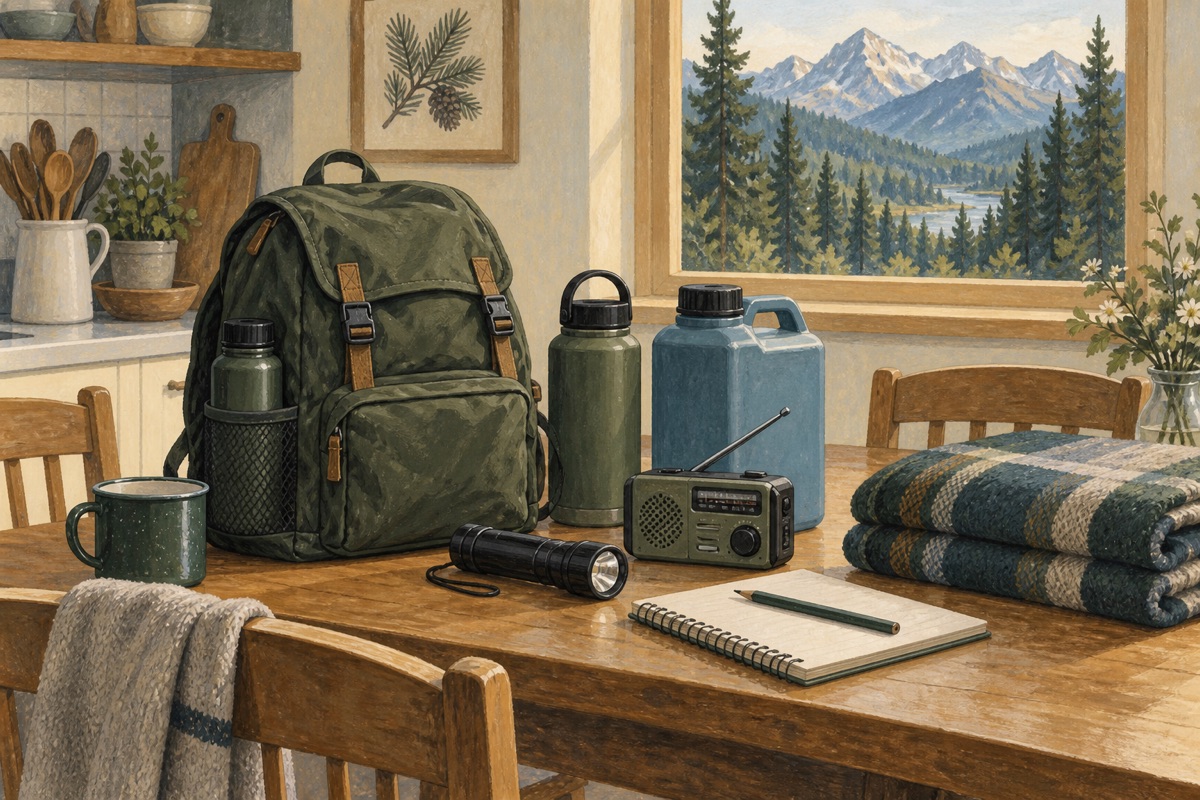
A backpack by the door is useful. Knowing who will pick up the children, where the spare medication is, and how to hear about an evacuation matters just as much. Begin your Idaho emergency plan with the people in your household and the problems that would interrupt their day.
Start with your address, not a shopping list
The Idaho Office of Emergency Management recommends identifying local hazards and consulting your county emergency manager. It also recommends a communications plan, evacuation supplies, preparation for outages, and a household stockpile that can support two weeks at home. A portable 72-hour kit serves a different purpose from that larger reserve. Read Idaho’s household guidance.
Write down three questions: What stops working when the electricity goes out? Who needs help leaving? Where could we stay if home becomes unsafe? A household with a private well, for example, needs to consider whether its water supply depends on an electric pump. An upstairs apartment raises different questions about carrying supplies and leaving with limited mobility.
Find the right local information
Use the state’s county and tribal emergency manager directory to find your local office. From its official website, check how to register for local alerts. Save that page alongside your utility’s outage information. Keep a paper contact list too; a bookmark is less useful when your phone battery is empty.
Give water its own place in the plan
CDC recommends at least one gallon per person per day for three days, with a two-week supply if possible. Four people therefore need at least 12 gallons for three days, or 56 gallons for two weeks. Pets and some health or weather conditions increase the amount needed. These figures are planning baselines, not a reason to ration someone’s drinking water. CDC water-storage guidance.
Use unopened commercial bottled water or suitable food-grade containers. Label water you fill yourself and replace it every six months. Keep it cool, out of sunlight, and away from fuel or chemicals. Spread the storage across accessible locations if a single heavy container would be difficult to move.
Build around what your family already uses
Idaho’s emergency-kit guidance includes shelf-stable food, a radio, lighting, family documents, and supplies for children and pets. It also recommends keeping supplies at home, at work, and in vehicles. Idaho emergency-kit checklist.
Before buying a premade kit, check its contents against your actual household. Does the food need cooking? Can everyone use the flashlight? Are glasses, chargers, and necessary personal supplies accounted for? Make a medication plan with your pharmacist rather than assuming a generic first-aid kit covers prescriptions.
A manageable first week
- Write the contact and meeting-place plan.
- Find local alerts and save the official links.
- Count the water and shelf-stable meals already available.
- Put portable essentials together and test the lights.
- Walk through leaving home with everyone who would need to come.
Finish by recording what is missing and setting a date to check it again. Your next useful step may be a second pair of glasses or a neighbor’s phone number, not another piece of equipment.