An Idaho winter car kit: what to pack before snow
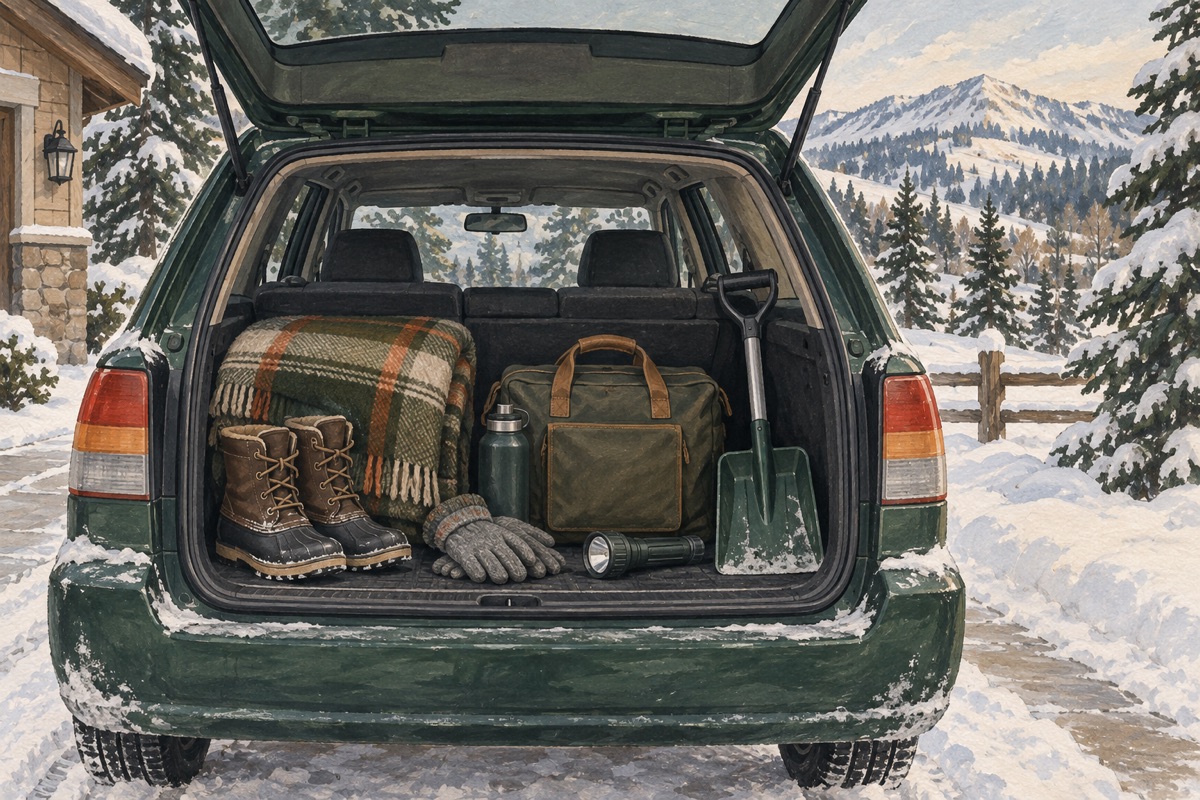
The useful winter kit is the one still in the car when you need it. A blanket borrowed for a picnic and a flashlight with dead batteries leave gaps that a shopping receipt cannot fill. Before cold-weather travel, open the trunk and check what is actually there.
Check the trip before the equipment
Idaho Transportation Department advises checking Idaho 511 before driving, inspecting tires, battery, and washer fluid, and allowing extra travel time. In icy conditions, slow down, leave more stopping room, and switch off cruise control. Give snowplows space rather than treating them as an obstacle to pass. ITD winter-driving guidance.
Look at the whole route, including the return trip. A clear driveway does not tell you what conditions will be at a higher elevation later that evening. Agree on a check-in time with someone who knows your route. A kit supports a travel decision; it does not make a closed road passable.
Pack for the people riding with you
ITD’s printable checklist includes winter clothing, waterproof boots, a blanket, water and snacks, a first-aid kit, flashlight, phone charger, ice scraper, small shovel, jumper cables, traction material, and tire chains. Download ITD’s winter-kit checklist.
Use that list as a starting point. If you normally drive in work shoes, put boots in the car. If children ride with you, check whether the spare layers still fit. Pack food your passengers can eat without preparation, taking allergies into account. Count blankets and warm clothing against the number of passengers, not just the driver.
Keep the first things you need within reach
A simple packing arrangement is easier to maintain than one overfilled bin. Keep a small accessible pouch for the flashlight and charging cable. Put clean clothing and blankets together in a dry bag. Store heavier tools securely so they cannot become loose objects during hard braking.
Do a driveway rehearsal: find the light in the dark, locate the first-aid kit, and check whether luggage blocks the emergency supplies. Read the vehicle manual before using chains or jump-start equipment. Those are tasks to understand before cold hands and poor visibility make them harder.
Review before longer journeys
The National Weather Service recommends winter vehicle preparation and carrying emergency supplies, including warm clothing, food, and water. Its checklist is a useful second check when planning a longer trip. NWS winter preparation.
Check battery-powered equipment, replace used food, and inspect stored water containers. Follow each item’s storage instructions; a parked vehicle can expose supplies to temperature extremes. Bring necessary medications with you under appropriate storage conditions rather than leaving them in the trunk indefinitely.
Make the kit a routine
Choose a repeatable trigger: the first cold-weather forecast, a monthly fuel stop, or the evening before an out-of-town journey. A short check is enough to catch missing gloves and depleted batteries. Keep a paper inventory in the bag and mark what you borrow.
If you are planning for the rest of the household too, start with our Idaho emergency plan. The car kit should fit that plan, including who knows where you are and how you will communicate if the trip changes.